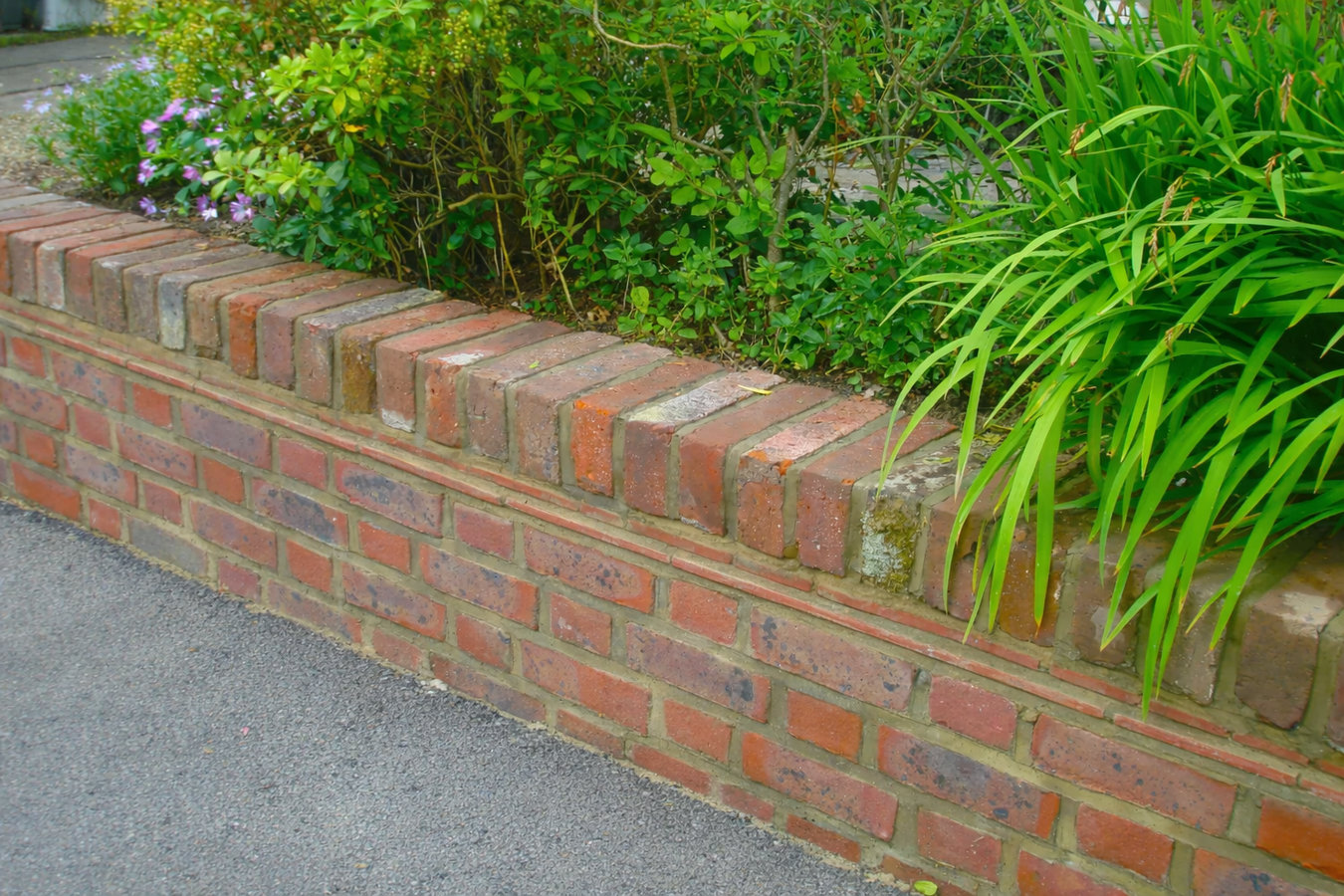
A brick wall that leans, cracks, or fails a permit inspection costs you more in the end. We build garden walls, boundary walls, and retaining walls with proper footings, seismic reinforcement, and full permit management in Menlo Park.
Brick wall installation in Menlo Park, CA means laying individual bricks row by row in a mortar bed on a concrete footing sized for local soil conditions - a standard residential garden or boundary wall takes one to two weeks of active construction once permits are approved and the footing has cured.
The visible work - bricks going up row by row - is only part of the project. The footing that the wall sits on is what actually determines whether it stays plumb and solid over decades. In Menlo Park, where clay soils shift seasonally and the area sits in a high seismic zone, those two factors alone - a properly sized footing and seismic reinforcement inside the wall - separate a wall that lasts from one that cracks within a few years. A permit is required for most walls above a few feet, and a city inspector will check the work at key stages - which protects you at resale and gives you documentation that the job was done correctly.
If you are replacing a leaning or crumbling existing wall, we assess whether a repair is enough or a full rebuild is the more practical route. For walls adjacent to a slope, our stone masonry work is a related option worth considering. For walls that show crumbling mortar but solid brick structure, targeted brick repair is often the more cost-effective path.
Stand back and look at your wall from the side. If it bows outward or leans in any direction - even slightly - that is a structural warning sign, not just a cosmetic one.
In Menlo Park's clay soils, this kind of movement often means the footing has shifted and the wall needs to be rebuilt from the base up, not just patched.
Run your finger along the joints between bricks. If the mortar crumbles out easily, feels soft, or has gaps you can see daylight through, water is getting in.
Left alone through a few wet Peninsula winters, that moisture works its way deeper and eventually causes bricks to crack or the wall to fail entirely.
If you have a slope held back by a brick or block wall, check it every spring after the rainy season. Cracks running horizontally across a retaining wall - especially near the base - mean the wall is under stress.
Soil that has absorbed months of rain becomes heavier and pushes harder. A compromised retaining wall needs professional attention before the next rainy season, not after.
Wood fences in Menlo Park typically last 10 to 15 years before rot, termites, or storm damage takes them out. If you are replacing a fence along a property line, a low brick wall is a popular upgrade.
A brick wall along a property line lasts far longer than wood and requires almost no maintenance - worth getting a masonry quote alongside your fence quotes to compare long-term value.
Most brick wall projects in Menlo Park fall into one of four categories, and the right scope depends on what the wall needs to do. Garden walls and landscape borders are the most common - low freestanding structures used to define a planting area, a patio edge, or a seating wall. Boundary and privacy walls are taller and require deeper footings and, in most cases, a building permit and seismic reinforcement. Retaining walls are structural - they hold back soil on a slope - and have the most demanding engineering requirements of the three. For existing walls that are still mostly sound, targeted repair and partial rebuilds are often the most cost-effective route rather than a full tear-down.
Every new brick wall we install starts with a footing pour. The footing is the part of the project that is invisible once the wall is done, but it is the part that matters most for long-term performance on Menlo Park's clay soil. We also carry brick samples you can review before work begins, so you know exactly what your finished wall will look like next to your home's existing exterior materials. If you are looking at a combination of a new boundary wall and updated stone masonry on the same property, both can often be scoped together for a single mobilization.
Low freestanding brick walls used to define raised planters, landscape borders, or seating areas - suited to homeowners who want a clean, finished edge in their outdoor space.
Taller walls built along property lines to create privacy between neighboring properties - a durable alternative to wood fencing for homeowners who want something that lasts decades.
Structural brick walls engineered to hold back a slope or raised grade - built with proper footings and drainage to handle the soil pressure common on Menlo Park hillside lots.
When a full rebuild is not needed, we remove failing sections, re-pour footings where necessary, and relay brick to match the existing wall - suited to walls where the majority of the structure is still sound.
Two conditions in Menlo Park make brick wall installation more demanding than the same project in many other California cities. The first is the clay-heavy soil common across the San Francisco Peninsula. Clay swells when it absorbs winter rain and shrinks when it dries in summer. A wall that is not sitting on a footing sized and placed for that movement will shift, crack, and eventually lean. The second is seismic risk - Menlo Park sits close to both the San Andreas and Hayward faults, and California's building code requires masonry walls here to be reinforced with steel and grout inside the wall. Both of these factors add cost compared to a simpler market, but they are not optional. Homeowners in Foster City face the same soil and seismic conditions, and the same standards apply there.
The permit and design review landscape adds another layer. Many Menlo Park neighborhoods - particularly Allied Arts, Sharon Heights, and West Menlo - have active homeowners associations that review exterior construction before work can begin. The city itself requires a building permit for most walls above a few feet, which triggers a formal inspection at key stages. These requirements protect you as a homeowner: an inspector catching a problem during construction is far less costly than discovering it during a home sale. Before work begins on any project near the public sidewalk, we confirm whether an encroachment permit is also required through the City of Menlo Park Building Division. Homeowners in San Carlos and nearby Peninsula cities have similar permit requirements, and we handle those as part of the same process.
We respond within 1 business day to schedule a free site visit. Bring up any existing wall concerns, slope conditions, or HOA requirements you are aware of - it helps us come prepared with the right questions.
We assess the ground conditions, measure the area, and identify whether the project requires a City of Menlo Park building permit. You receive a written estimate that breaks down labor, materials, footing work, and any permit fees - no surprises on the final invoice.
We submit the permit application through Menlo Park's Building Division and track the review. If your neighborhood requires HOA approval, we can advise on what documentation is typically needed. Once permits are cleared, we set your start date.
We dig and pour the concrete footing, allow it to cure, then lay bricks row by row with uniform mortar joints and seismic reinforcement where required. When the last brick is laid, we clean the site and coordinate any required city inspection.
Free on-site estimate. We assess soil conditions, review permit requirements, and give you a written quote with no line items that appear later as surprises.
(415) 294-8180The clay-heavy soils under Menlo Park properties swell in winter and shrink in summer. We size and depth the concrete footing specifically for your site conditions - not the minimum that gets a permit signed - so your wall stays plumb and solid through the full seasonal cycle for decades.
Menlo Park sits near both the San Andreas and Hayward faults. California requires masonry walls in this zone to be reinforced with steel and grout. We include this in every wall we build - and we will not quote a price that omits it. If another quote seems unusually low, ask them directly whether seismic reinforcement is in scope.
We apply for required building permits through the City of Menlo Park, coordinate the inspection schedule, and hand you documentation at the end of the job. That paperwork protects you at resale and proves the work was done to code - without a single visit to city offices on your part.
In a high-cost market like Menlo Park, low quotes that balloon once work starts are a real problem. Every estimate we provide breaks down labor, materials, footing work, and permit fees in writing before you sign anything. What you approve is what you pay.
These are not abstract selling points - they are the specific conditions that cause brick walls to fail prematurely in Menlo Park when a contractor does not account for them. We hold a valid California masonry license, which you can confirm directly through the California Contractors State License Board. We are also familiar with the standards published by the Brick Industry Association, which set the baseline for material quality and installation practices in the industry.
Natural stone walls and structural masonry using fieldstone, granite, and other stone materials - an alternative to brick for homeowners who prefer a more organic, textured finish.
Learn MoreTargeted repair of damaged or failing brick sections - for walls where the overall structure is sound but individual bricks or mortar joints need professional attention.
Learn MoreSpring and summer slots fill fast - reach out now to get on the schedule before the dry-season rush begins.