Rotting fences and failing retaining walls keep coming back. A properly built concrete block wall handles Menlo Park winters, Peninsula soils, and seismic activity without cracking, leaning, or needing replacement.
Concrete block walls in Menlo Park, CA are built from individual blocks stacked in overlapping rows and set in mortar on a poured concrete footing, and most standard garden or boundary walls are completed in two to four days once the footing has cured.
The part you never see - the footing - is the most important part. A contractor who skimps on footing depth to save time is setting up a cracked or leaning wall within a few years, especially in Menlo Park where clay soils shift with every wet season. Walls that need to hold back a slope are retaining walls, and those require drainage behind them - usually gravel backfill and a perforated pipe - so water pressure does not build up and push the wall over.
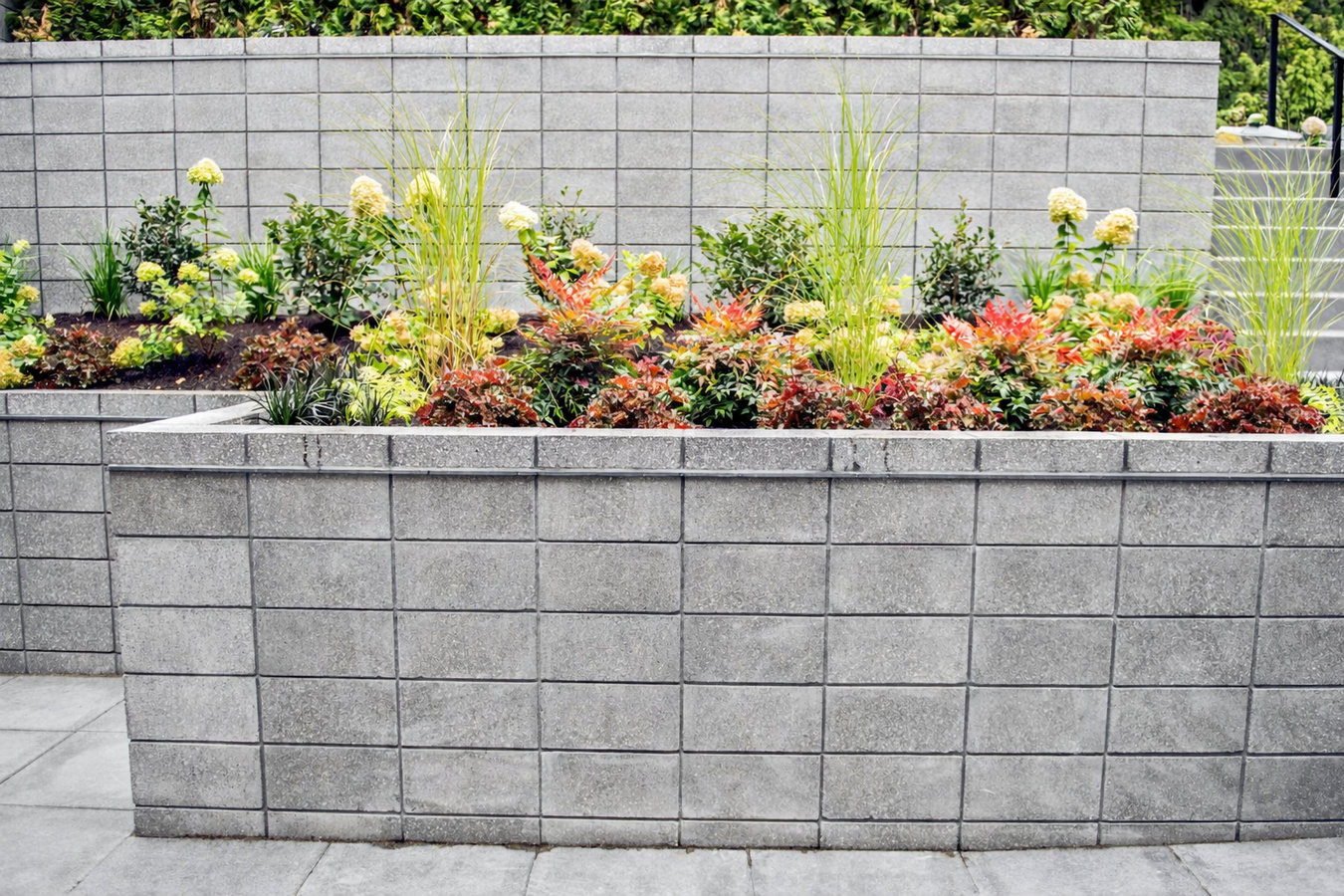
Block walls pair naturally with retaining wall construction - many Menlo Park homeowners use a block wall as the structural system for a terraced slope, then face it with stone veneer or stucco for a finished appearance.
If you stand at one end of a wall and sight down its length, it should look perfectly straight. A wall that curves outward or leans noticeably to one side has lost its structural integrity - often because water pressure built up behind it or the footing shifted.
In Menlo Park's clay soils, this kind of movement is common in walls not built with proper drainage, and it tends to worsen each rainy season.
Small hairline cracks in mortar are normal aging, but diagonal cracks running from a corner toward the middle of the wall, or cracks wider than a pencil tip, signal that the wall is moving.
Menlo Park's seasonal soil expansion and contraction puts constant stress on older walls, and cracks that grow wider year over year need professional attention soon.
If you have a hillside or raised planting area, signs that the retaining structure is losing the battle include soil spilling over the top, the wall tilting forward, or gaps opening at the base.
This is a safety issue, not just a cosmetic one - a failing retaining wall can release a significant amount of soil quickly and unexpectedly.
Wood fences and timber retaining walls in Menlo Park's damp winters tend to rot from the base up. Replacing them every eight to twelve years gets expensive, and each replacement starts the same cycle over again.
A concrete block wall, built correctly, can last fifty years or more with almost no maintenance - making it a one-time investment instead of a recurring cost.
We build freestanding boundary walls, privacy screens, retaining walls, and garden borders using standard and specialty concrete block. Every wall starts with a footing poured to the depth that Menlo Park's soil conditions require - not the minimum depth that saves the most time. For walls in the city's seismic zone, steel reinforcement and grout fill are standard practice, not an add-on.
Finished surfaces can be left as natural block, painted, stuccoed, or faced with thin stone veneer for a more decorative result. For homeowners building on sloped lots or adding accessory dwelling units, we integrate block wall construction with our foundation block wall installation service when the wall needs to serve a structural as well as a boundary purpose.
Best for homeowners defining property lines or creating a permanent privacy screen between neighbors.
Best for raised planting beds, terraced gardens, and low decorative borders around outdoor living areas.
Best for hillside lots and graded slopes where soil needs to be held back with a drainage-integrated structure.
Best for homeowners who want the durability of block with a stucco, painted, or stone-faced finish to match the home's exterior.
Menlo Park's clay soils are one of the main reasons block walls fail before their time. The ground swells every wet season and shrinks every summer, and a footing that was not designed for that cycle will start showing problems within a few years. That is not a corner-cutting issue you can see on a bid sheet - it is a question of whether the contractor knows what is in the ground before they pour the footing. We have built walls in Sharon Heights, the Willows, and throughout the Peninsula, and we know how soil conditions shift from one neighborhood to the next.
The city permit and inspection process matters here too. Menlo Park requires permits for most masonry walls, and a wall that was built without one can create headaches at resale or when you apply for insurance coverage. We serve homeowners in Menlo Park and surrounding communities including San Mateo and East Palo Alto, and we are familiar with the permit requirements and soil conditions across the Peninsula.
We respond within 1 business day to schedule a free on-site visit. We review the wall location, soil conditions, and any drainage or grade challenges before writing a quote - no phone estimates that fall apart mid-project.
For most block walls in Menlo Park, we apply for a building permit through the city and coordinate any HOA design review before work begins. This step typically takes two to four weeks and should always be handled by your contractor.
We dig a trench for the concrete footing, allow it to cure, then build the wall course by course. For walls that need reinforcement, steel rods go in as the wall rises and hollow cores are filled with grout - standard practice for Menlo Park's seismic zone.
Retaining walls get a gravel and drain pipe system behind them before backfill. Freestanding walls get a finish coat or decorative surface if planned. We coordinate the city inspection and do not consider the job complete until the inspector signs off.
We visit your site before quoting, handle every permit, and build to Menlo Park's seismic and soil requirements. No surprises.
(415) 294-8180Much of Menlo Park sits on clay-heavy soils that expand in winter and shrink in summer. We design every footing depth and drainage system with that seasonal movement in mind - a wall built without this local knowledge will start showing cracks within a few years.
Menlo Park sits between the San Andreas and Hayward faults. We thread steel rods through block cores and fill them with grout on every wall that requires it - no skipping reinforcement to win a low bid. This is how walls stay standing when the ground moves.
We handle the entire City of Menlo Park permit process and coordinate the final inspection. You get full documentation that protects your home at resale and gives you proof the work meets code - without trips to city offices or paperwork on your end.
One of the most common homeowner complaints is contractors who disappear mid-project. We give you a written project schedule before work starts, show up when we say we will, and do not leave your yard torn up over a weekend.
The Concrete Masonry Association of California and Nevada sets regional standards for block wall construction that reflect California-specific seismic and soil conditions. We build to those standards on every project - because a wall that looks fine on day one but fails in five years is not a wall worth building.
Structural block wall systems built specifically to support foundations, with footing and reinforcement designed for load-bearing applications.
Learn MoreEngineered retaining walls for hillside lots and graded yards, with drainage systems sized for Menlo Park's wet winters.
Learn MoreSpring dry-season slots fill up in February and March - call today or submit the form and we will be in touch within 1 business day to schedule your site visit.