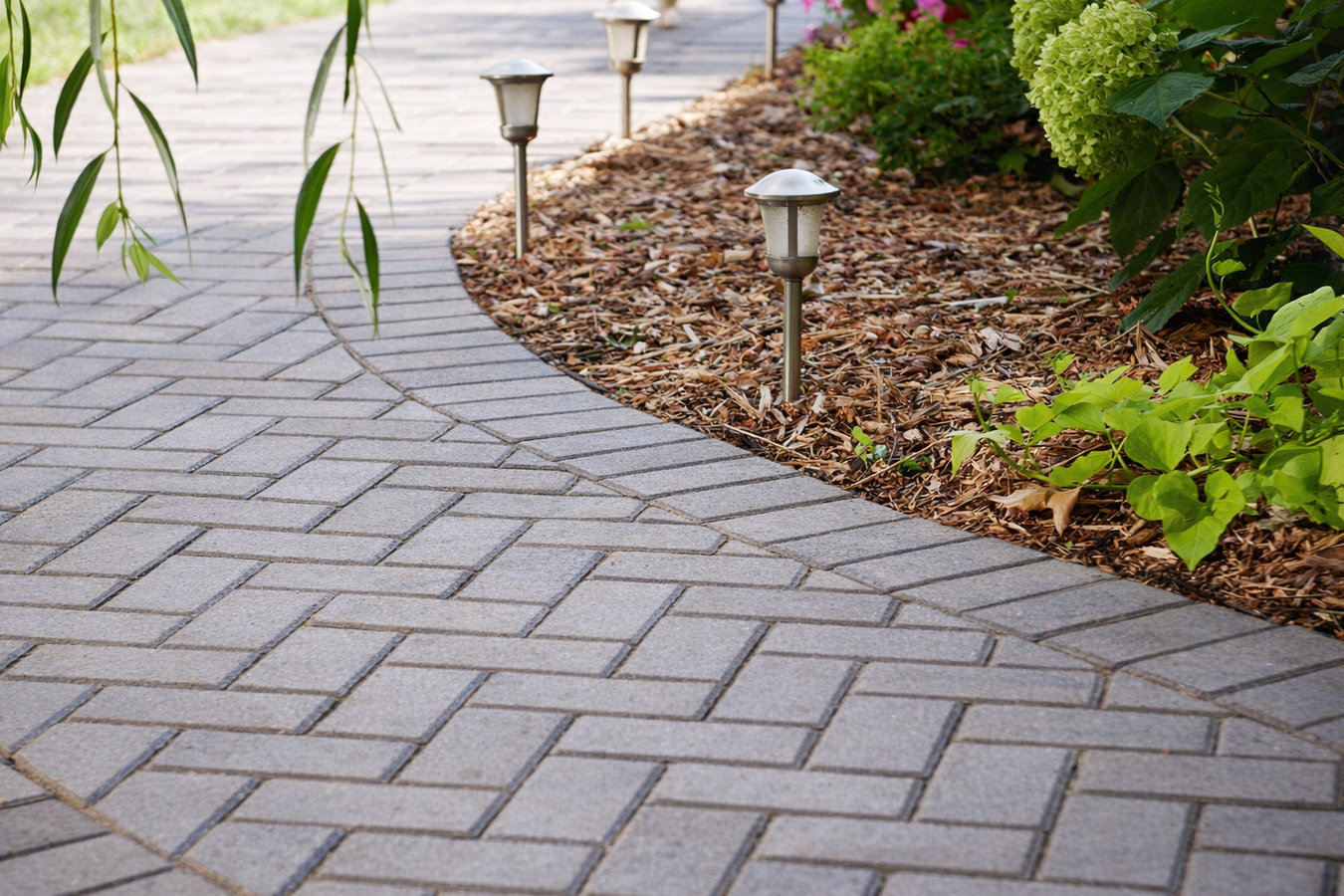
Cracked, heaving, or missing walkways are a tripping hazard and an eyesore. We build concrete, paver, and stone paths designed for Menlo Park clay soils and wet winters - so the path stays level long after installation.
Walkway construction in Menlo Park, CA means clearing the ground, excavating six to eight inches, compacting a gravel base, and installing your chosen surface - concrete, pavers, or natural stone - with most standard residential jobs completed in one to three days of active work.
The surface material is what you see, but the base is what determines whether your path stays flat in five years. Menlo Park's clay soils expand when wet and shrink when dry. A contractor who skips a proper base layer - or does not compact it correctly - builds a walkway that will crack or heave within a few rainy seasons. We excavate to the right depth, add a compacted gravel base sized for local soil conditions, and finish with a slope that drains water away from your home rather than toward it.
For homeowners expanding their outdoor space, a new walkway pairs naturally with driveway pavers - both use the same base preparation principles and can often be scheduled together. If you want a defined edge or a privacy boundary alongside your path, our brick wall installation team can handle that as part of the same project scope.
If a section of your walkway rocks, tilts, or has a visible crack running across it, the base underneath has shifted. In Menlo Park, this often happens because clay soil expands and contracts through wet and dry seasons.
A crack wider than a pencil, or a section lifted more than half an inch above its neighbor, is past the point of a simple patch - it usually means a section needs to be removed and rebuilt properly.
A ridge or hump near a large tree means a root has grown underneath and is lifting the surface from below. This is very common in Menlo Park's older, tree-lined neighborhoods like Allied Arts and the Willows.
Left alone, the raised section becomes a tripping hazard and the damage spreads. Addressing it sooner is almost always less expensive.
After a rainstorm, watch where the water goes. If it sits in puddles rather than draining off to the side, the walkway was installed without proper slope or has settled unevenly over time.
Standing water accelerates surface wear and can seep toward your foundation - both problems worth fixing before the next rainy season.
A worn dirt track across the lawn where people naturally walk is a clear signal. If guests and family members are cutting across the grass to reach your front door or side gate, you need a real path.
A properly built walkway protects your lawn, improves drainage, and makes your property look more finished - which matters in a neighborhood where curb appeal directly affects home value.
Most homeowners come to us with one of three materials in mind, and the right choice depends on your budget, the look you want, and what your yard will ask of it. Poured concrete is the most cost-effective path forward - low maintenance, highly durable, and easy to keep clean. Concrete pavers give you a more finished look with the added benefit that individual pieces can be lifted and reset if a root or soil shift moves one. Natural stone - flagstone, bluestone, or slate - is the premium choice that suits Menlo Park's older, character-filled neighborhoods particularly well.
For properties with a slope between the street and the front door - common in Sharon Heights and other hillside areas - we also build walkways that incorporate masonry steps and grade transitions. Whatever the configuration, every installation starts with excavation and base preparation sized for local soil conditions. The surface material is the finish; the base is what actually determines longevity. If your property also needs a path from the driveway to a side gate or backyard, that work can often be scoped into the same visit and project.
The most cost-effective option - a durable, low-maintenance surface suited to homeowners who want a clean, permanent path that requires minimal upkeep year after year.
Individual interlocking pieces set in a sand or gravel base - a good middle ground for homeowners who want a more finished look and the flexibility to reset sections if a root or soil shift moves a piece.
Flagstone, bluestone, or slate set in mortar or sand - best suited to homeowners in Menlo Park's older neighborhoods who want a distinctive, warm-toned path that fits the character of their home.
Paths on sloped lots that incorporate masonry steps - suited to Sharon Heights and hillside properties where a level surface requires careful grading and step construction.
Menlo Park sits on Bay Area clay soils that shift noticeably between the wet and dry seasons. That movement is the primary reason walkways in this area fail faster than in other parts of California. A properly built path accounts for that ground behavior from the start - with a thick, well-compacted gravel base and planned expansion joints that give the surface room to flex. Without those steps, you are building on a surface that will push back against the concrete or stone above it within a few years. Homeowners in Redwood City deal with the same soil conditions, and the same installation standards apply there.
The mature tree canopy in established Menlo Park neighborhoods - particularly the Willows and Allied Arts - adds another layer of complexity. Large oaks, redwoods, and ornamental trees common in these areas have root systems that extend well beyond the canopy and can lift walkway surfaces from below over time. We assess root proximity before digging and design the path to work around the root zone wherever possible, using paver systems or flexible installation methods in areas where roots are a real factor. Homeowners in Palo Alto with similar tree-lined lots benefit from the same approach. The goal is a path that coexists with your landscape rather than competing with it. For permitting, if your walkway connects to the public sidewalk, we handle the encroachment permit through the City of Menlo Park Public Works Department before any ground is broken.
We respond within 1 business day to schedule a free on-site visit. You do not need final decisions made before you call - a rough idea of where you want the path and what material you are leaning toward is enough.
We measure the area, check the slope, look for nearby tree roots or irrigation lines, and identify whether an encroachment permit is needed. You receive a written quote before committing to anything.
If a City of Menlo Park encroachment permit is required, we submit the application. This typically takes one to two weeks to process. Once permits are in hand, we schedule your start date.
The crew excavates, compacts the base, and installs your chosen surface. Before leaving, we walk the finished path with you and address anything that does not look right - same day.
Free on-site estimate. We assess the soil, check for roots, and give you a written quote before you commit to anything.
(415) 294-8180The clay-heavy soils under most Menlo Park properties swell in winter and shrink in summer. We excavate to the right depth, compact a gravel base sized for your soil conditions, and add control joints where needed - so your walkway stays flat through the full seasonal cycle, not just the first year.
If your walkway connects to the public sidewalk or crosses the city right-of-way, we apply for the required encroachment permit through Menlo Park's Public Works Department and keep you updated on where the application stands. You never have to call the city yourself.
Many homes in Menlo Park's older neighborhoods sit near large oaks, redwoods, and other mature trees whose roots extend well past the canopy. Before we break ground, we assess root proximity and design the path to work around the root zone - protecting both your new walkway and your trees.
Every walkway we install is sloped roughly a quarter inch per foot so water drains away from your home. We check the finished surface before the crew packs up. If water pools toward your foundation after a rain, that is a problem that should not leave our job site.
These are the practical reasons walkway projects in Menlo Park require more care than a generic contractor assumes. Local soil conditions, mature trees, and permit requirements are not abstract concerns - they are the specific reasons paths fail prematurely in this area. We account for all of them before the first shovel goes in, and we verify the results before we pack up. You can also verify our California masonry license directly through the California Contractors State License Board.
Brick garden walls, boundary walls, and retaining walls built with proper footings for Menlo Park's clay soils and seismic zone requirements.
Learn MorePaver driveways installed with the same base preparation and drainage standards as our walkways - scaled up for vehicle loads and longer runs.
Learn MoreSummer slots fill quickly - reach out now to lock in your installation date before the busy season books up.