A foundation wall built for Menlo Park means seismic reinforcement, proper waterproofing, and footings designed for Bay Area clay soils - not a generic install that fails after a few wet seasons.
Foundation block wall installation in Menlo Park, CA means building a structural wall from individual concrete masonry units - hollow-core blocks stacked on a poured concrete footing - to form the base that holds your home up, and most residential projects run from a few days to about two weeks of active construction once permits are in hand.
Most homeowners call about a foundation block wall when an existing wall is showing cracks, leaning, or letting moisture in, or when they are adding an accessory dwelling unit or room addition that needs a new foundation to support it. Foundation block walls are most common under homes with crawl spaces, where the wall carries the floor framing above it and keeps the crawl space dry. Getting the footing depth and waterproofing right from the start is what separates a wall that lasts fifty years from one that starts causing problems in five.
When a wall has cracked but the underlying structure is still sound, targeted foundation repair may be all that is needed - we assess both options and give you a straight answer on which one makes sense for your specific situation.
Cracks that run at an angle - especially ones wider at one end than the other - signal that the wall is shifting or settling unevenly. In Menlo Park, this pattern is frequently linked to expansive clay soils swelling and shrinking through wet and dry seasons.
A crack you can fit a quarter into is wide enough to warrant a professional look. Do not wait for it to grow before calling.
Stand back and look at your foundation wall from a distance. If it curves inward toward your crawl space or basement, soil pressure from outside is winning the battle. This is a structural problem, not a cosmetic one.
A wall that has moved more than an inch out of plumb is generally past the point of simple repair and needs professional assessment right away.
Menlo Park's wet season runs November through March, putting real pressure on foundation walls. Standing water, damp soil, or a musty smell in your crawl space after a storm means the wall is no longer keeping moisture out effectively.
Left alone, that moisture leads to wood rot and mold in the floor framing above - a problem far more expensive to fix than the original wall issue.
When a foundation wall shifts, the structure above it shifts too. Doors or windows on the ground floor that suddenly will not open or close the way they used to are often an early sign of foundation movement - not a carpentry problem.
In an older Menlo Park home built in the 1950s or 1960s, this is worth having a foundation contractor look at before the movement gets worse.
We install new foundation block walls, rebuild deteriorated or earthquake-damaged walls, and build crawl space perimeter systems for homes throughout Menlo Park and the surrounding Peninsula. Every project starts with a site visit to assess soil conditions, existing damage, and the connection between the wall and the wood framing above it - because getting that connection right is especially important on the older homes that make up a large share of Menlo Park housing stock.
For homeowners adding an outdoor kitchen or other permanent structure, we coordinate the foundation work with the rest of your project so permits, inspections, and scheduling all move together. We handle every stage - footing excavation, block installation, steel reinforcement, waterproofing, drainage, and city sign-off - under one contract, so you are not managing multiple crews.
Full-depth CMU wall built from a poured concrete footing up, sized for load-bearing applications and the soil conditions specific to your Menlo Park lot.
Replacement of a deteriorated or earthquake-damaged wall, bringing the structure up to current California seismic and waterproofing standards.
Short-span block walls that enclose and support the crawl space beneath a home, including anchor bolt connections to the wood framing above.
Foundation block wall systems for accessory dwelling units and room additions, coordinated with your permit application from the start.
Menlo Park sits between the San Andreas and Hayward fault systems, which means foundation walls here carry a seismic requirement that does not exist in most other parts of the country. Steel rods threaded through the hollow cores of each block and filled with grout are not optional extras - they are what gives the wall the flexibility to absorb ground movement without cracking or collapsing. A significant share of Menlo Park homes were built in the 1940s through 1960s, when these reinforcement standards did not exist, so many older walls also lack the anchor bolt connections that tie the top of the wall to the wood sill plate above it. Upgrading those connections is often part of the same project as installing a new wall.
Soil conditions add a second layer of complexity. Much of the San Francisco Peninsula has clay-heavy soil that absorbs water in winter and shrinks in summer, putting ongoing pressure on any wall built into it. Homeowners in Palo Alto and Redwood City face the same conditions, and the permit process through their respective building departments - like Menlo Park's - requires inspections at multiple stages, not just at final completion. Building the permit lead time into your project plan from the start is the single most effective thing you can do to avoid frustration. The Portland Cement Association and the Structural Engineers Association of California both publish guidance on block wall construction in seismic zones that reflects the standards applied here.
We respond within 1 business day to schedule a free on-site visit. Foundation work needs eyes on the actual conditions - soil type, access, existing damage - before any quote can be accurate.
We submit plans to the City of Menlo Park's Building and Safety Division and manage the permit process. This typically takes several weeks - your main job is to be available to sign documents if needed.
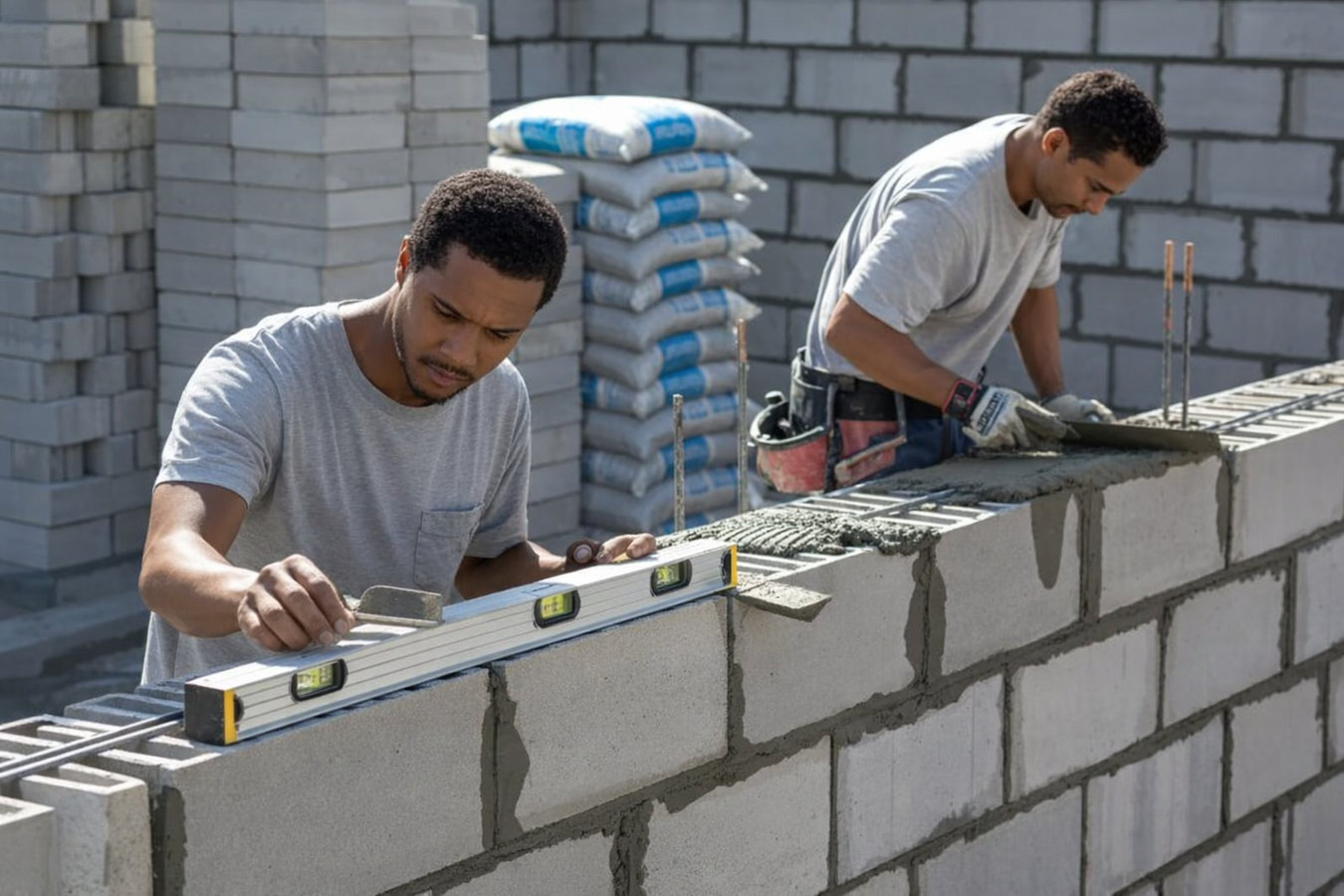
The crew excavates, pours the concrete footing, and waits for it to cure before stacking begins. Blocks go up row by row with steel rods placed in the hollow cores and filled with grout - the step that gives the wall seismic resistance.
The exterior wall face gets a waterproof coating, a drainage layer is placed against the base, and the excavated soil is carefully backfilled. We coordinate the city inspection and do not call the job complete until the inspector signs off.
We respond within 1 business day. No obligation, no sales pitch - just an honest assessment of what your home actually needs.
(415) 294-8180Menlo Park's clay-heavy soils expand when wet and shrink when dry. We design every footing depth and drainage plan with that seasonal movement in mind. A footing too shallow for local soil conditions is the number-one reason block walls crack within a few years of installation.
Menlo Park sits near the San Andreas and Hayward fault systems. We place rebar through block cores and fill them with grout on every wall that requires it - not as an optional upgrade, but as standard practice. This is what keeps a wall intact when the ground moves.
We handle the City of Menlo Park permit application, coordinate required city inspections, and hand you the documentation at the end. That paperwork protects your home at resale and proves the work was done to code - without you making a single trip to city offices.
A large share of Menlo Park's housing stock dates from the mid-century era, when foundation standards were far less stringent than today. We assess the connection between the new wall and the existing wood framing above it - a detail older homes often need upgraded at the same time as the wall itself.
Foundation work in Menlo Park is not a job where a low bid and a fast start is the right trade-off. The combination of local seismic requirements, clay soils, and strict permitting means every decision - footing depth, reinforcement, waterproofing, drainage - has long-term consequences. We bring the local knowledge and the documentation to back up the work.
Verify any masonry contractor holds a current California license through the Contractors State License Board before signing a contract.
Permanent masonry structures - cooking stations, countertops, pizza ovens - built on a properly engineered slab in your Menlo Park backyard.
Learn MoreTargeted repair of cracked, bowing, or leaning foundation walls before a full replacement becomes necessary.
Learn MorePermit timelines in Menlo Park mean the sooner you start, the sooner your home is protected - reach out now and we will get the process moving.