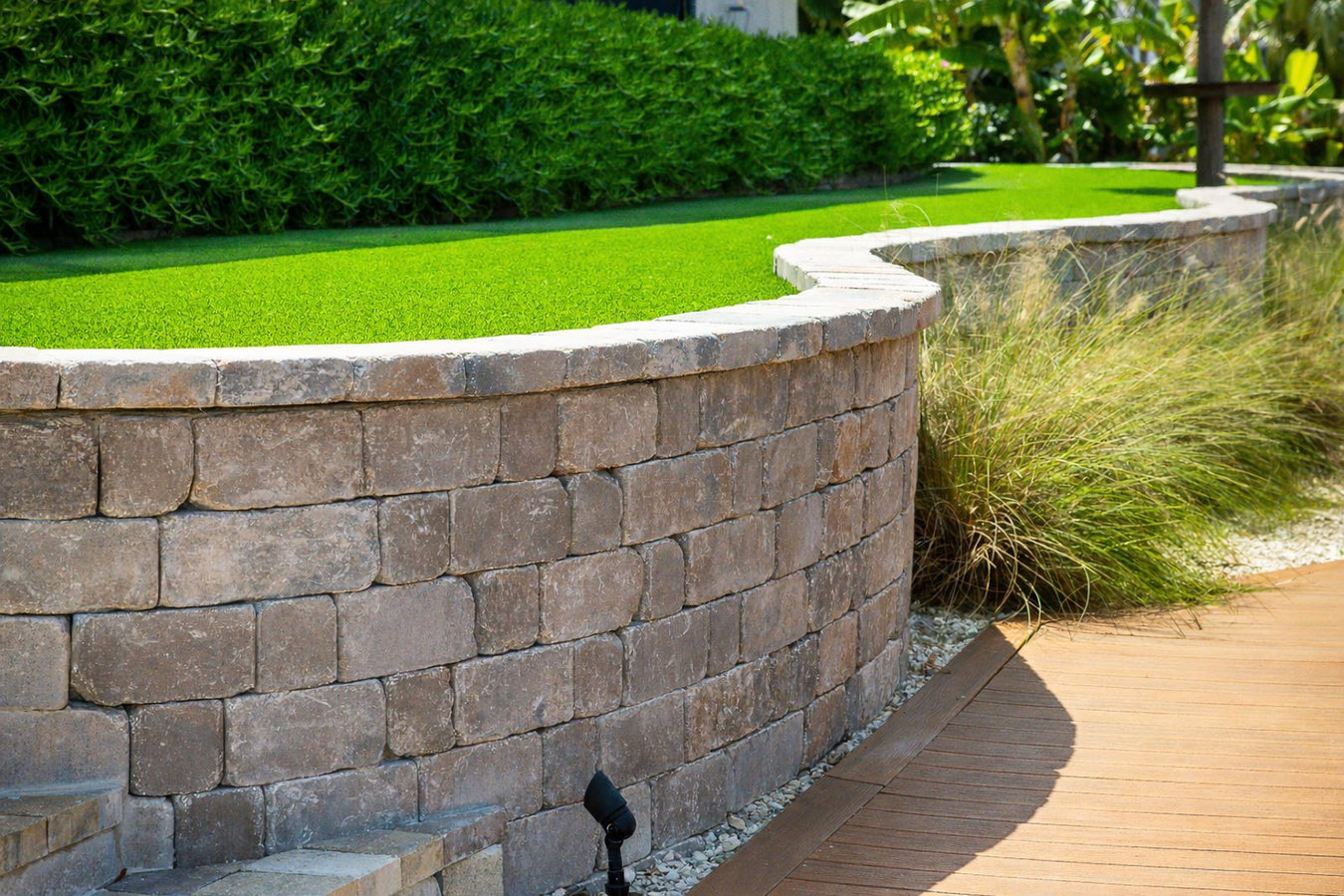
Eroding hillsides, a failing old wall, or a slope too steep to use - a properly built retaining wall stops soil movement and can turn unusable grade into level, functional outdoor space.
Retaining wall construction in Menlo Park, CA means building a structural wall to hold back soil on a sloped or uneven property, and a straightforward residential wall - 20 to 40 feet long and three to four feet tall - typically takes two to five days from excavation to cleanup.
The part that matters most is what you cannot see once the job is done: the drainage layer behind the wall. Water that builds up with nowhere to go is the leading cause of wall failure - not the material, not the design. A properly built retaining wall always includes gravel and a drain pipe to move water away from the structure before pressure can build up. On the Peninsula, where winters can bring weeks of steady rain, skipping this step is a shortcut that costs homeowners far more later.
When a hillside property needs both a retaining wall and surface improvements, we often pair this work with masonry restoration to address any existing structure that needs repair alongside the new construction.
If soil, mulch, or gravel migrates downhill after a storm, your slope is eroding. In Menlo Park, where clay soils absorb water slowly and winter rains can be intense, this kind of erosion can accelerate quickly.
A retaining wall stops the movement and protects your landscaping investment before the next wet season.
A wall that has started to tilt away from the hillside is under stress it was not designed to handle. Horizontal cracks running across the face of the wall are especially serious - they often mean the wall is beginning to fail.
A wall that falls can damage fencing, landscaping, or structures below it - do not wait on this one.
Standing water near the base of a slope or against a wall is a sign drainage is not working as it should. In Menlo Park's wet winters, poor drainage behind a slope can saturate soil and dramatically increase the pressure on whatever is holding it back.
Puddles that linger for days after rain are worth having a contractor evaluate before they create a larger structural problem.
If a significant portion of your yard is too steep for a patio, garden, or flat lawn, a retaining wall can create level terraces that turn hillside into functional outdoor space.
Many Menlo Park homeowners near the foothills have done exactly this to make the most of their properties.
We build retaining walls from concrete block (CMU), natural stone, and poured concrete - each suited to different slope heights, site conditions, and aesthetic goals. Our scope on every project includes excavation, compacted base preparation, wall construction, drainage installation, and permit coordination with the City of Menlo Park. For walls that trigger city permit requirements, we handle the application and coordinate any required inspections from start to finish.
On properties with significant grade changes, tiered wall systems - two or more shorter walls separated by planted terraces - often accomplish more than a single tall wall while staying within permit thresholds and looking better in the landscape. We also work alongside concrete block wall installation when a project calls for both structural retaining and privacy or boundary walls on the same property.
Best for properties needing a durable, cost-effective wall with a clean, modern profile.
Best for homeowners who want a wall that blends with existing landscaping or a more natural aesthetic.
Best for properties with significant elevation changes where a single tall wall is not practical or permitted.
Best when an existing wall is leaning, cracking structurally, or no longer draining properly.
Neighborhoods near the Menlo Park foothills - including parts of West Menlo Park and areas bordering Atherton - often have significant grade changes that make retaining walls a practical necessity rather than a cosmetic choice. The Bay Area's clay-heavy soils compound this: clay expands when saturated during winter rains and contracts as it dries in summer, putting constant lateral pressure on any wall holding back a slope. A contractor who has not worked in this soil environment may underestimate how much that movement affects the wall's long-term stability - and build accordingly. Menlo Park's Mediterranean climate also means the ground can shift from bone-dry in September to heavily saturated in December, which is why scheduling construction in late summer or early fall - before the rains arrive - gives new walls the best chance to settle and cure properly.
We serve homeowners across the area, including Redwood City and East Palo Alto, where hillside and sloped lots are common and the same soil conditions apply. The City of Menlo Park requires a building permit for walls over four feet tall, and steeper sites may also require a licensed engineer's review of the design before permits are issued. We handle that coordination so you are not navigating city processes on your own while also managing a construction project.
We respond within 1 business day and schedule a free on-site walk of your property. We look at the slope, soil, existing walls, and how water moves across your yard - not just measure for a price over the phone.
You receive a written estimate covering materials, labor, and any permit costs. If your wall will exceed four feet or sits on a challenging slope, we tell you whether a city permit or engineer's review is required - before any work begins.
We handle the permit application with the City of Menlo Park. Processing typically takes one to three weeks. If your HOA requires design approval, that process can run in parallel - start it as early as possible to avoid delays.
Excavation, base preparation, wall construction, and drainage installation all happen in sequence. If a permit was pulled, a city inspector signs off on the finished work. We coordinate that visit and do a final walkthrough with you before leaving.
We respond within 1 business day, walk your property in person, and give you a written quote before any commitment. No obligation.
(415) 294-8180Menlo Park requires permits for walls over four feet, and some hillside projects require engineer review. We navigate both processes on your behalf so you know the full picture - cost, timeline, and requirements - before work begins.
The most common reason retaining walls fail is water buildup behind them. Every wall we build includes a gravel-and-pipe drainage layer sized for Menlo Park's winter rain volumes - because a wall without drainage is not finished work.
We hold a current California contractor's license, verifiable through the CSLB, and carry full insurance on every job. You can check our credentials before you hire - we encourage it.
When you reach out, you hear from us within one business day to schedule a free site visit. No obligation - just an honest assessment of your slope and a written estimate you can compare.
The National Concrete Masonry Association publishes the design standards for segmental retaining walls that govern base preparation, drainage, and load capacity. We build to those standards and combine them with direct knowledge of Menlo Park's permit process and soil conditions - giving you a wall that holds up in this specific environment, not just one that meets a generic spec.
Repair aging or damaged masonry surfaces - including existing retaining walls - before small problems turn into full replacements.
Learn MoreNeed a structural block wall for privacy, property separation, or a foundation application? We build concrete masonry unit walls sized for your specific load.
Learn MoreLate summer and fall are the best windows for retaining wall construction in Menlo Park - reach out now to schedule your free site visit.